Bullied for being Russian, now a Finnish prizewinner
Tampere writer Dess Terentjeva won this year’s Finlandia Prize for fiction, Finland’s top book award, for a novel about sexual minorities and oppression in Russia. The writer might not have dared to publish it as a Russian citizen.
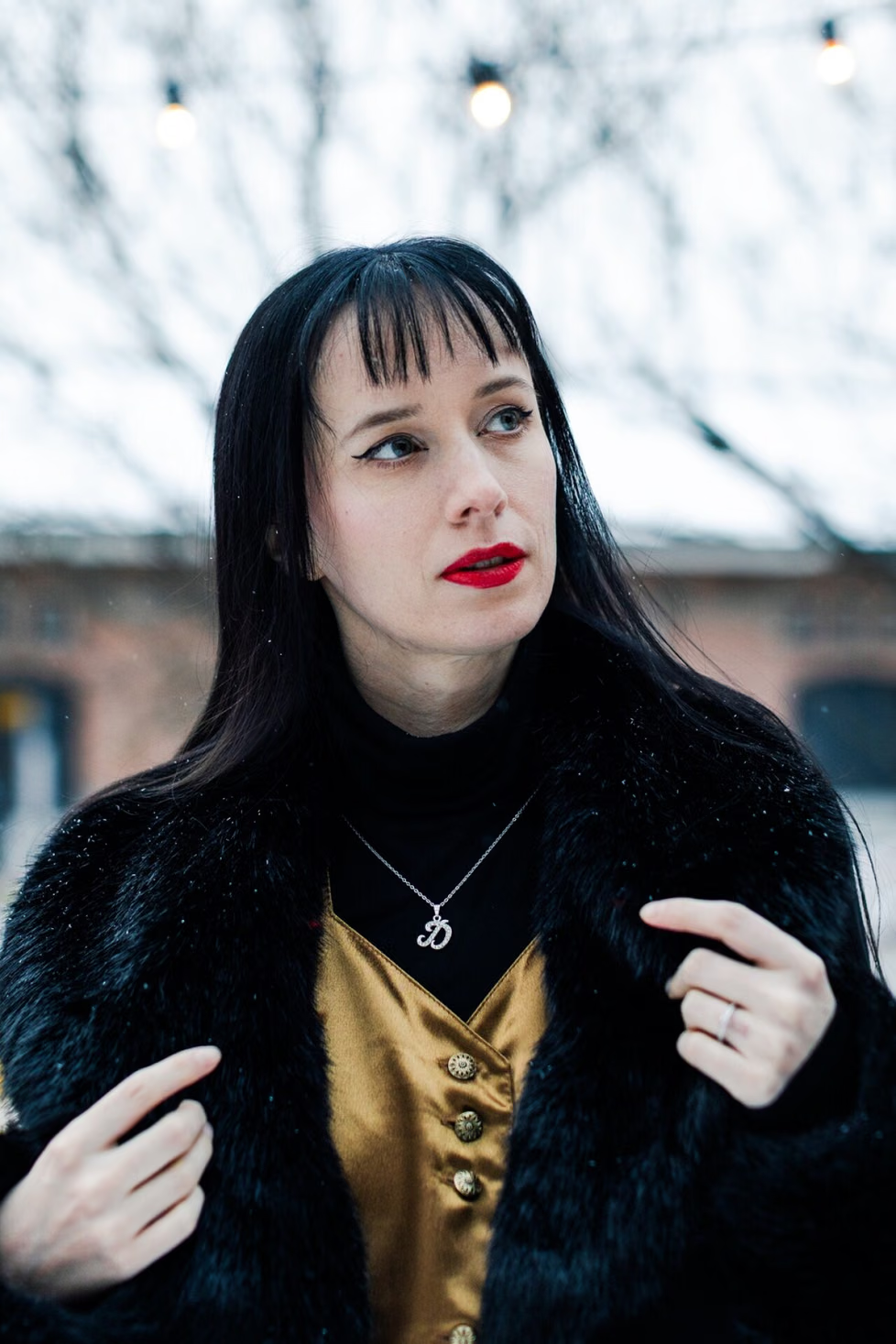
Dess Terentjeva says it was only after entering the book world that the writer felt seen as fully Finnish for the first time. Photo: Laura Talvitie
Susanna Laari HS
Originally published by Helsingin Sanomat Gazette translated this article into English from the Finnish original. Read how we choose and translate stories in How we work.
Dess Terentjeva, from Tampere, has won the 2026 Finlandia Prize for fiction with the novel Suuri koira juoksee ja päätön kukko lentää (The big dog runs and the headless rooster flies), published by WSOY. Opera singer Helena Juntunen chose the winner.
The win took Terentjeva completely by surprise.
A day after the call from the publisher, the happy writer says at the Telakka restaurant that the news still hasn’t quite sunk in.
Without Russia’s full-scale invasion of Ukraine in February 2022, the winning novel would never have come into being, at least not in the same form. Nor was publishing it a given for the writer.
“I don’t know whether I would have dared to publish my novel as long as I had Russian citizenship,” Terentjeva says.
We will never stamp a marriage certificate like this, the official at the window announced, and drew the curtains shut in Terentjeva’s face.
Ever since Russia’s war of aggression began, Terentjeva, who is Finnish-Russian, had wanted to give up her Russian passport, but it was not easy. Now it felt like hitting a wall. In Russia’s official reality, people like Terentjeva did not exist: the writer had married a woman, and had even taken a new surname with the marriage.
“It was a terrible disappointment. But in that moment I realized that I had to write about this. This was a unique opportunity to show people that this kind of thing is possible,” Terentjeva says of how the novel came about.
Suuri koira juoksee ja päätön kukko lentää is a novel that moves across three timelines and depicts the history of sexual minorities in Finland’s eastern neighbor, Russian oppression and the shame of being Russian.
One of the timelines depicts the Kafkaesque attempt of a protagonist much like Terentjeva to get rid of Russian citizenship.
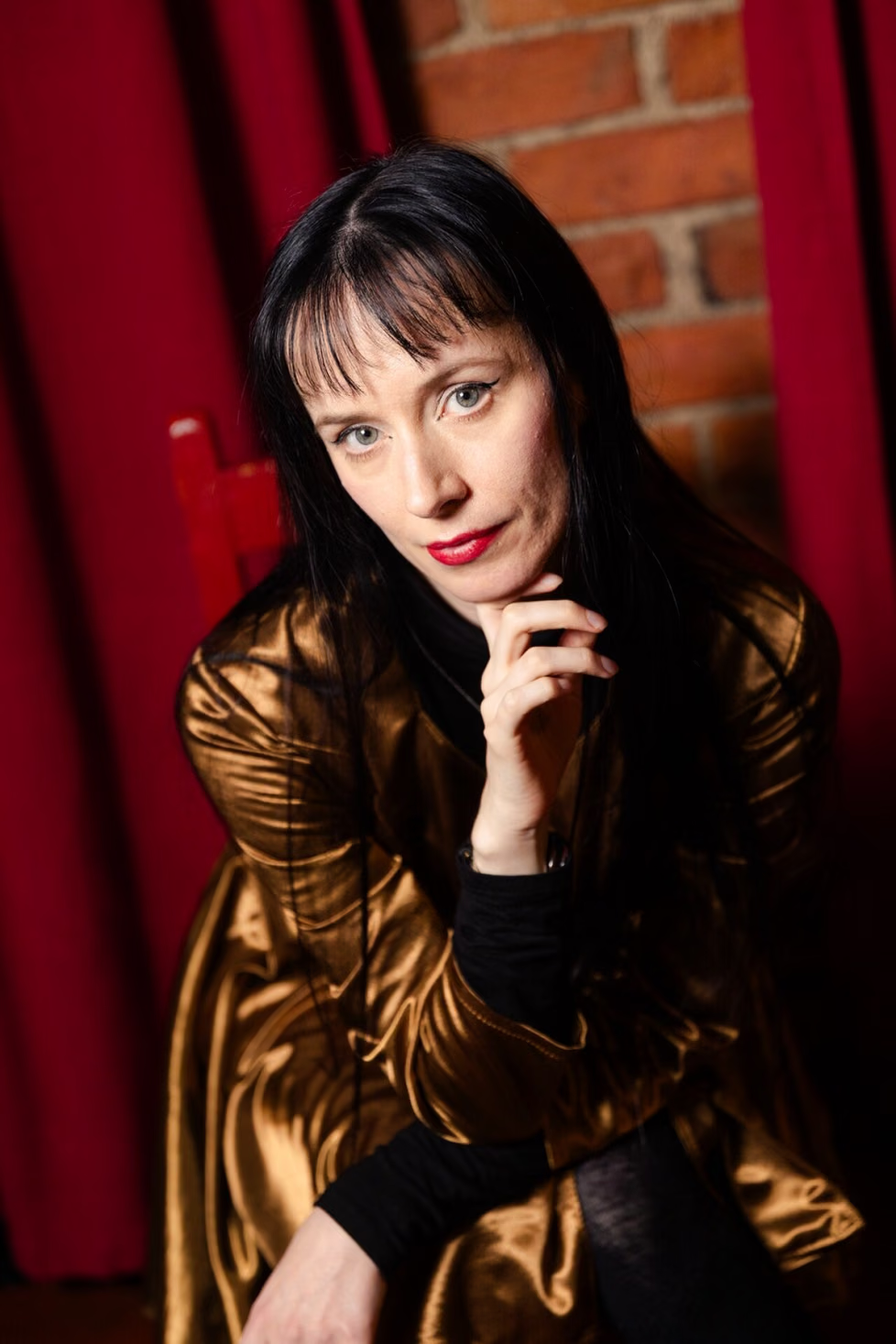
Russia’s war of aggression against Ukraine triggered an intergenerational fear of dictatorship in Dess Terentjeva, who is Finnish-Russian. Photo: Laura Talvitie
Terentjeva, 34, was born in Petrozavodsk and has lived in Finland since the age of 8. But when Russia invaded Ukraine in February 2022, she was filled with horror.
“An intergenerational fear of dictatorship was triggered in me, which was interesting, because I lived in Russia in the ’90s and I have no personal experience of the Soviet Union, the way my mother and grandparents do,” Terentjeva says.
Terentjeva knew that the Russian state does not look kindly on dual citizens, and wondered whether something could be demanded of her on the basis of the Russian passport.
“It may have been paranoid, but my imagination ran wild. The fear was directly connected to the Russian state.”
After the borders were closed, the citizenship was no longer of any practical use. Before that, the passport had made travel easier. That made the decision to give it up easy, but the process was anything but.
Neitsytpolku still stirs up feelings mixed with horror in Terentjeva.
To get into the Russian consulate there, you have to pass through two gates. There is a click behind your back, and for a moment the visitor stands between closed gates.
Over a year and a half, the writer stood in that in-between space numerous times, always carrying new certificates and translations, because these could not be sent by email and had to be brought to the consulate in person. Every time, Terentjeva was afraid of not getting back out after going in.
“I don’t know if anyone really cared who I am. But I couldn’t help how I felt,” Terentjeva says.
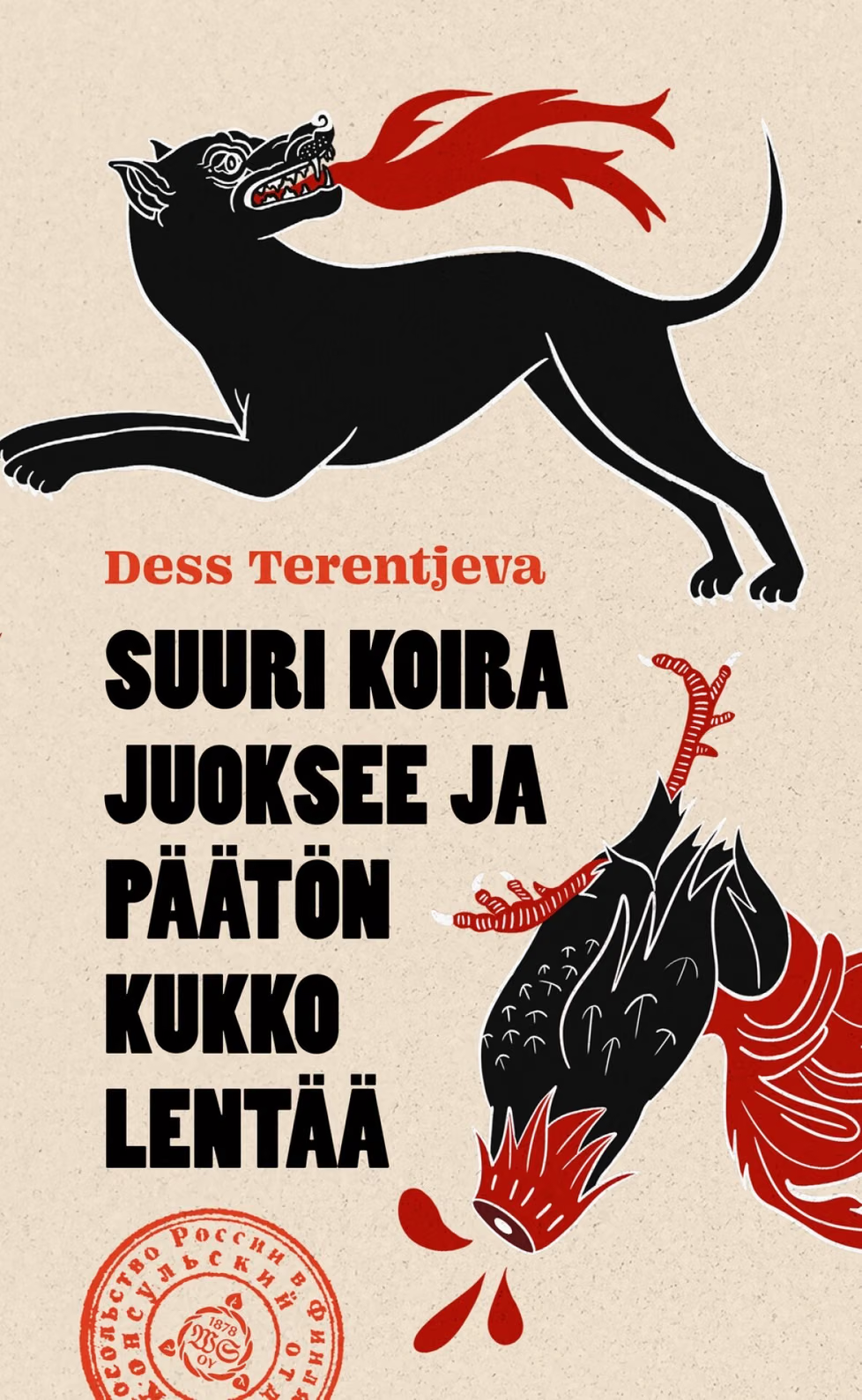
Text in the image, translated
- Suuri koira juoksee ja päätön kukko lentää (The big dog runs and the headless rooster flies)
The novel Suuri koira juoksee ja päätön kukko lentää portrays the process as arbitrary and harsh.
Of course, Terentjeva had known the phenomenon since youth, when she often crossed the border.
“You think you’ve filled everything in correctly and the same way as before, but suddenly it isn’t good enough at customs. The way the Russian authorities act is unpredictable and tied to a culture of ruling by fear.”
In early 2023, Terentjeva traveled from Tampere to the Russian consulate in Helsinki for the last time, the eighth. Despite having been told earlier that the marriage certificate would never be accepted, she did not want to give up.
This time Terentjeva happened to get a nice and patient official, who rewrote the whole application.
A stranger spoke of a wife in her mother tongue. A Russian stranger; a female official of the Russian state saw Marusja’s marital status and understood, is how the novel describes the scene.
Terentjeva knows that many Finns wonder why Russian dual citizens don’t give up their other nationality. Her story gives one reason.
“Many would like to, but it’s impossible if, for example, you no longer have your birth certificate, or you have tax debts in Russia, or you’re transgender.”
“It can also be frightening to go to the consulate if, say, you’ve openly protested against Russia’s military actions.”
“If you’re badly left out, you’re susceptible to influence.”
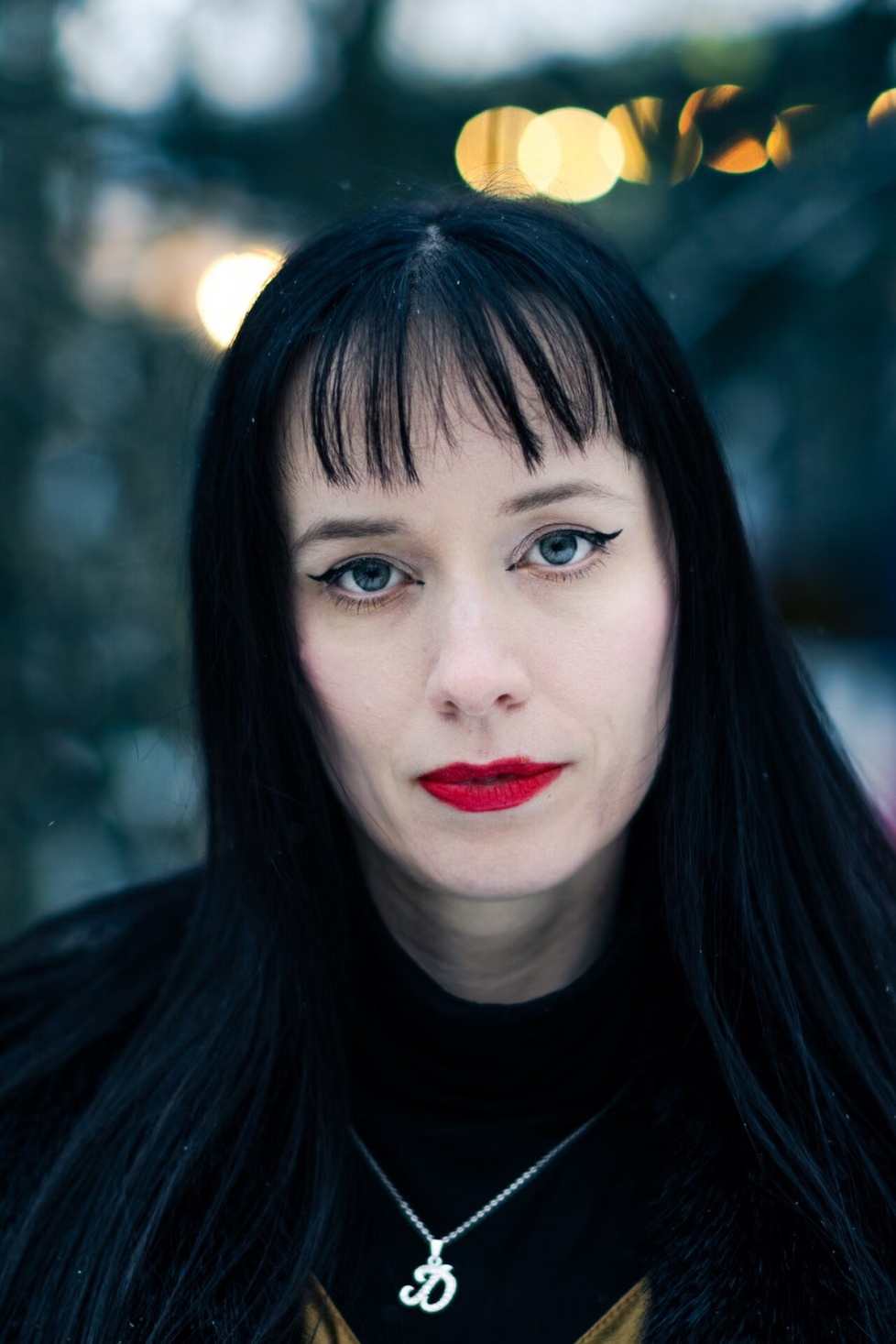
Photo: Laura Talvitie
Terentjeva finds “Finnish-Russian” a good definition of her identity, because the weight in the word falls on Finland, which comes first.
Her strongest language by far is Finnish, which she spoke even as a child, at home in Joutseno with her Russian mother. She has also written all seven of her books in Finnish.
“Finnish is also my language for swearing. At home in Russia I hadn’t been allowed to swear, but as I grew up in Finland, Finnish swear words eventually stopped being forbidden. Still, Russian is my mother tongue and the language of my emotions,” she says.
For Dess as a schoolchild, settling into Finland was not easy, even though Joutseno is close to the eastern border.
“It was made clear to us that you’re the others,” Terentjeva says.
At school, Terentjeva was called names and excluded. She remembers taking the bullying neutrally, as if accepting the situation as a given, a fact that had to be lived with.
“Of course it wasn’t a good thing, but what could I do about it? I didn’t want to force myself on others if they thought I hadn’t earned my place. It’s not some great tragedy to me.”
She believes she will never be normal in everyone’s eyes, since she also belongs to a sexual minority.
Terentjeva points out that excluding people is not only wrong, of course, but also dangerous.
“We humans are herd animals. If you’re badly left out, you’re susceptible to influence and an easy recruitment target for certain groups.”
At that point, almost anyone who drags you out of loneliness will do, even if you don’t agree on everything.
After everything Terentjeva had been through, the book world felt amazing. The writer’s debut, Neonkaupunki (Neon city), written together with Susanna Hynynen, came out in 2020.
“Right from my first book, people talked about me as a Finnish writer. I had lived in Finland for more than 20 years, but for the first time no one questioned my Finnishness or my presence.”
Terentjeva had never experienced equality like that before. She was invited to a WhatsApp group for debut authors, and the publisher presented her book the same way as everyone else’s.
“I think of the Finlandia Prize as a symbol and the culmination of all this.”
In early 2024, after almost two years of bureaucratic rigmarole, Terentjeva’s application to give up Russian citizenship was approved, and she was able to hand in her passport.
It felt a little sad.
Not giving up the passport itself, but the state of the world that made Terentjeva want to.
Spotted a mistake or something unclear in this article? Write to us about it at antti.karvanen@sanoma.com.